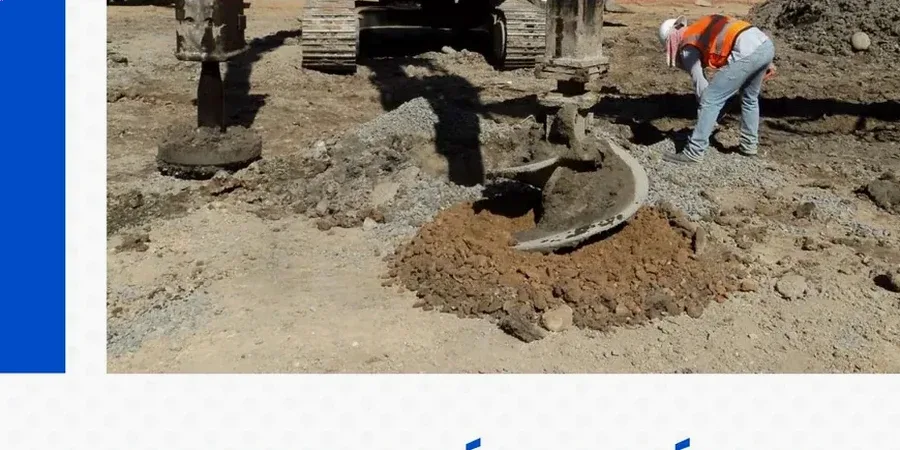
The first thing you notice on a Seattle site is the sound of the vibroflot—a deep, guttural rumble that resonates through the glacial till as the poker sinks into the ground. In neighborhoods from SoDo to Ballard, that vibration is the signature of stone column installation, a ground improvement method we rely on to handle the city’s notoriously layered subsurface. Seattle sits on a complex geological quilt: advance outwash, Vashon till, and soft recessional deposits all stacked within meters of each other. Stone column design here isn’t just about boosting bearing capacity; it’s about creating drainage paths through silty matrices and mitigating liquefaction in a seismically active basin. When we design these columns, we’re essentially building a vertical skeleton inside the soil that densifies the surrounding matrix while carrying structural loads from footings and mat foundations above. The improvement factor depends heavily on the fines content of the native soil—something we always verify with a complete grain size analysis before finalizing the column grid.
A well-designed stone column network in Seattle’s glacial soils functions as both a vertical drain and a load-bearing element—two jobs, one installation.
Local ground factors
In Seattle, we’ve seen too many projects where imported fill from the Denny Regrade or past industrial use was assumed to be uniform. It’s not. You can hit brick fragments, buried timber, and pockets of uncompacted silt within the same column location. A vibroflot that encounters an obstruction at eight meters doesn’t just stop—it can deviate, creating a column that’s discontinuous or pinched at depth. That’s a risk you won’t catch with surface settlement plates alone. We always recommend a post-installation verification program using CPT soundings through the column center and at mid-distance between columns to confirm both column integrity and the achieved densification in the surrounding soil. Another local reality: Seattle’s seasonal groundwater fluctuations—sometimes swinging two meters between February and August—alter the effective stress regime enough that a column designed for summer conditions may perform differently during winter rains. The design has to account for that envelope, not a single snapshot.
Regulatory framework
ASCE 7-22 (Minimum Design Loads and Associated Criteria for Buildings and Other Structures), IBC 2021 (International Building Code, Chapter 18: Soils and Foundations), ASTM D1586 (Standard Test Method for Standard Penetration Test (SPT) and Split-Barrel Sampling of Soils), ASTM D2487 (Standard Practice for Classification of Soils for Engineering Purposes (Unified Soil Classification System)), FHWA-NHI-16-072 (Ground Improvement Methods, Reference Manual Volumes I & II)
FAQ
How much does stone column design cost for a typical Seattle project?
For a standard commercial or light industrial site in Seattle, stone column design fees typically range from US$1,560 to US$5,300 depending on the complexity of the soil profile, the size of the treatment area, and the number of verification tests required. Projects on challenging sites near the Duwamish or with deep soft deposits may fall toward the upper end.
How do stone columns perform in Seattle’s glacial till compared to deep soil mixing?
In Vashon till, stone columns excel because the native granular matrix responds well to vibro-displacement and the columns carry out immediate drainage. Deep soil mixing is often reserved for softer, more cohesive deposits like the lacustrine silts found in certain basins. Stone columns tend to be more cost-effective when the soil already has some granular skeleton to densify.
What verification testing do you recommend after stone column installation?
We always recommend CPT soundings as the primary verification tool: one through the center of selected columns and one at the midpoint between columns. For critical structures, we may also specify zone load tests or plate load tests to confirm the composite modulus. The testing frequency depends on the site variability and the consequence class of the structure.
Can stone columns be installed right next to existing buildings in Seattle?
Yes, but with careful vibration monitoring. In dense Seattle neighborhoods like Capitol Hill or Queen Anne, we often specify pre-drilling through the upper fill to reduce vibration transmission, or use bottom-feed methods that minimize lateral displacement. A pre-condition survey of adjacent structures is standard practice before any vibro work begins.