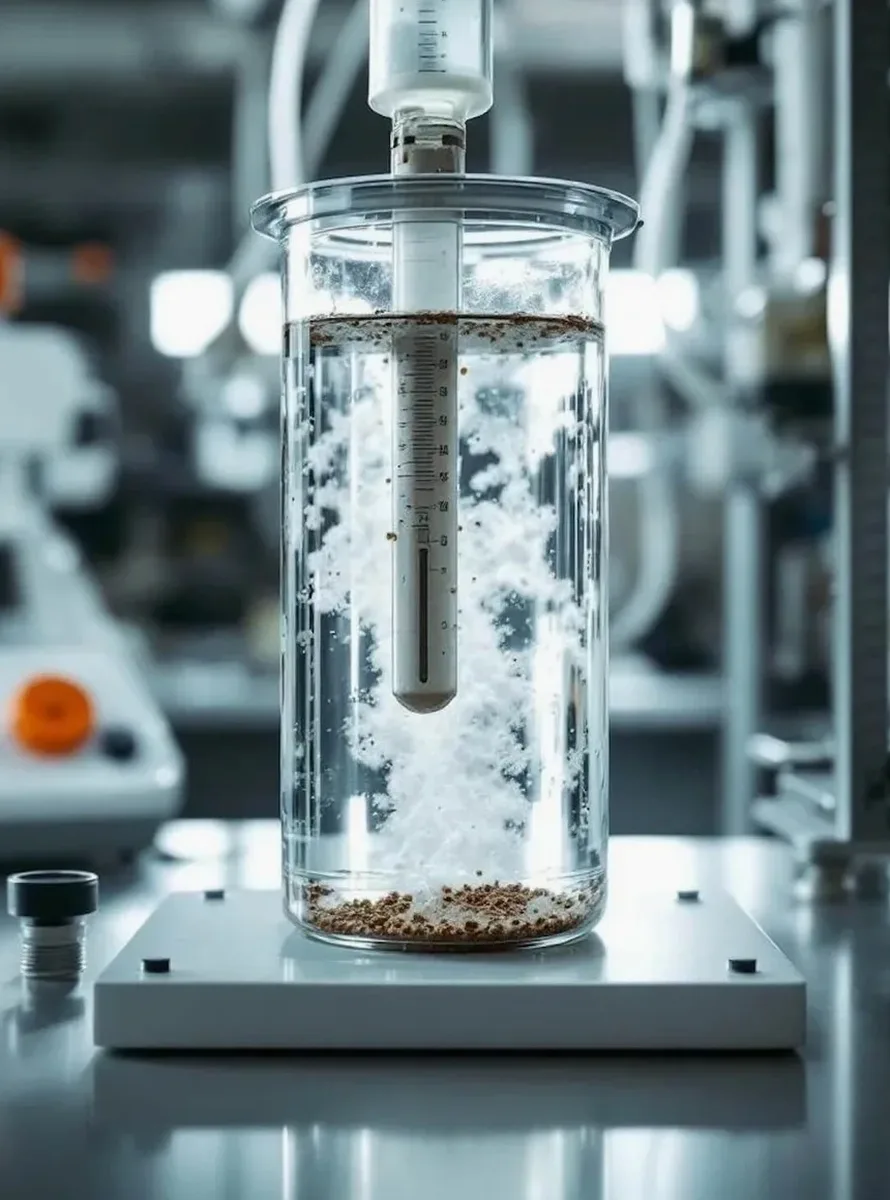
The glacial history of the Puget Sound region didn't just carve out Lake Washington and Elliott Bay—it laid down a bewildering mix of soil deposits that range from clean outwash sands to sticky lacustrine silts and clays. On one block in Seattle you can hit hardpan till; three blocks downhill you're in soft estuarine mud. This variability makes grain size analysis far more than a routine index test here. It becomes the first honest conversation you have with the ground. By pairing dry sieving for the coarse fraction with a hydrometer analysis for fines passing the No. 200 sieve, we reconstruct the full particle size distribution curve—and that curve guides everything from drainage design to liquefaction screening. In a city where winter rains saturate the glacial drift for months on end, understanding how fine-grained materials will behave under sustained seepage is not optional.
A full particle size curve from a single Seattle sample often tells you more about site hydrology in ten minutes than a dozen borehole logs without it.
FAQ
How much does a grain size analysis (sieve + hydrometer) cost in Seattle?
For a single sample with full sieve and hydrometer, the fee runs between $90 and $220 depending on whether we're doing just the wash sieve or the complete sedimentation curve with hydrometer readings over 24 hours. Volume pricing applies for multi-sample projects—reach out with the number of samples and we'll give you a straightforward unit rate.
Why do I need the hydrometer if the soil looks sandy in the split spoon?
Because Seattle's glacial soils are notorious for fooling the eye. A 'silty sand' can easily carry 15–25% clay when you run the hydrometer, and that clay fraction controls permeability, frost susceptibility, and liquefaction resistance. The IBC and ASCE 7 don't let you assume clean sand based on field description alone.
Can you run grain size analysis on samples from our own drill rig?
Absolutely. We work with samples from geotechnical and environmental drillers across King County. Just bring the bagged, labeled samples to our lab or coordinate a pickup—we need about 200 grams for sands and 115 grams for fine-grained material to run the full ASTM D422 suite.
What's the typical turnaround for a combined sieve and hydrometer test?
Most reports go out in three to five business days. The hydrometer side needs a 24-hour sedimentation period per ASTM D422, and we run quality checks on the curve before releasing results. If it's urgent, we can sometimes split the report—sieve data first, hydrometer the next day.