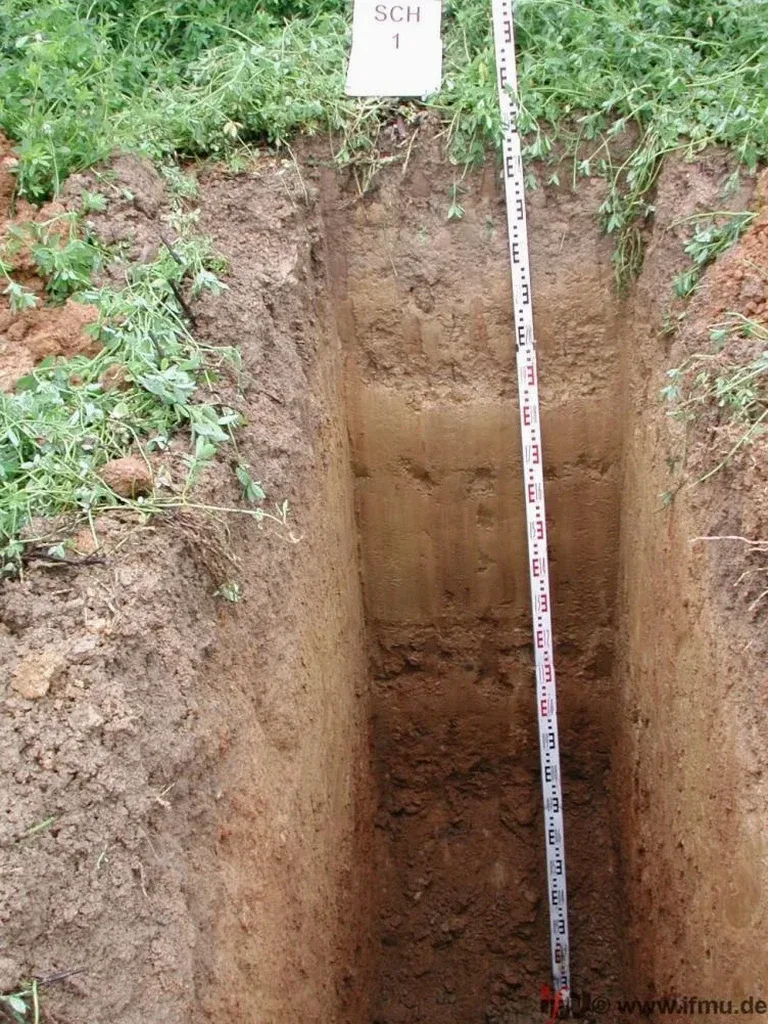
Seattle’s topography tells a story of glacial carving, volcanic mudflows, and a century of regrading that reshaped the downtown core. The Denny Regrade alone moved millions of cubic yards of earth, leaving behind a patchwork of fill soils that still surprises engineers today. When you need to know exactly what lies beneath a building pad or utility alignment, an exploratory test pit provides a window into the subsurface that no drill rig can match. Our team logs the stratigraphy face-to-face, measuring layer thicknesses, sampling the matrix, and identifying lenses of organic silt or loose urban fill that a split spoon might miss. In neighborhoods from Ballard to Beacon Hill, we have opened pits where glacial till transitions abruptly into lacustrine clay—a contact that governs drainage design and foundation selection. The IBC and Seattle’s locally amended building code require direct observation when presumptive bearing values are in question, and the test pit remains the most transparent method. Complementing our probing with a CPT test often sharpens the profile where the till is too dense to trench, giving you continuous cone resistance alongside the visual log.
Seeing the soil face with your own eyes beats any split spoon log—test pits in Seattle's glacial terrain expose the real stratification.
Method and coverage
Seattle sits on a glacial trough with over 730,000 residents spread across ridges, valleys, and liquefiable waterfront zones—the 2001 Nisqually earthquake (M6.8) reminded everyone that deep soil response varies block by block. An exploratory test pit is typically excavated to depths of 8 to 14 feet using a track-mounted excavator, exposing the soil profile in a vertical face that allows direct measurement of stratification, moisture condition, and seepage. We photograph the face, sketch the log, and extract block samples or bulk bags for laboratory classification under ASTM D2487. The method reveals cobble content, fissuring in overconsolidated clays, and the thickness of the A-horizon that developers must strip before compaction. Where the pit crosses the groundwater table, we record the stabilized level after 24 hours. For projects near steep slopes, linking the pit data with a
slope stability analysis helps determine setback distances and temporary cut angles. For foundations bearing on dense advance outwash, a
plate load test run adjacent to the pit quantifies the modulus of subgrade reaction, turning the visual log into a design parameter.
Local ground factors
The contrast between Capitol Hill’s compact glacial till and the Duwamish industrial corridor’s alluvial silts illustrates Seattle’s geotechnical split personality. On the hill, an exploratory test pit often hits refusal on dense lodgement till within five feet—fine for spread footings, but a headache for underground utilities. Down in the valley, the pit walls may slough through zones of uncompacted hydraulic fill and peat, requiring shoring or a stepped excavation just to reach six feet. Skipping the pit investigation in these transitional zones has led to differential settlement claims we have seen firsthand: one side of a building bears on competent till, the other on a pocket of marsh deposits the exploratory drilling missed. The test pit catches those pockets because it exposes a continuous face. For structures near the waterfront, we often pair the pit data with a liquefaction assessment to evaluate the triggering potential of the loose sand layers visible in the trench wall. When the pit reveals soft ground extending below the water table, a stone column ground improvement program becomes a practical remediation path before the foundation crew arrives.
FAQ
How much does an exploratory test pit cost in Seattle?
For a standard test pit 8 to 12 feet deep in accessible soil, the cost typically ranges from US$450 to US$770 per pit. The final price depends on access, traffic control requirements if the pit is in the right-of-way, and whether lab testing is bundled. Deeper pits, shoring, or pits in tight backyard access increase the rate.
What permits are needed to open a test pit in Seattle?
A private property pit generally needs no permit from SDCI (Seattle Department of Construction & Inspections) as long as it is backfilled promptly and does not undermine adjacent structures. Pits within the public right-of-way require a street use permit from SDOT, and we handle that application. Utility locates through 811 are mandatory at least two business days before excavation.
How deep can you go with an exploratory test pit, and what happens when you hit groundwater?
Most pits in Seattle reach 8 to 14 feet with a standard excavator. When we encounter groundwater, we note the seepage depth immediately and return after 24 hours to measure the stabilized water level—this gives a true indication of the seasonal high water table. If the pit collapses below the water table, we switch to a stepped excavation or supplement with a CPT sounding to extend the profile.