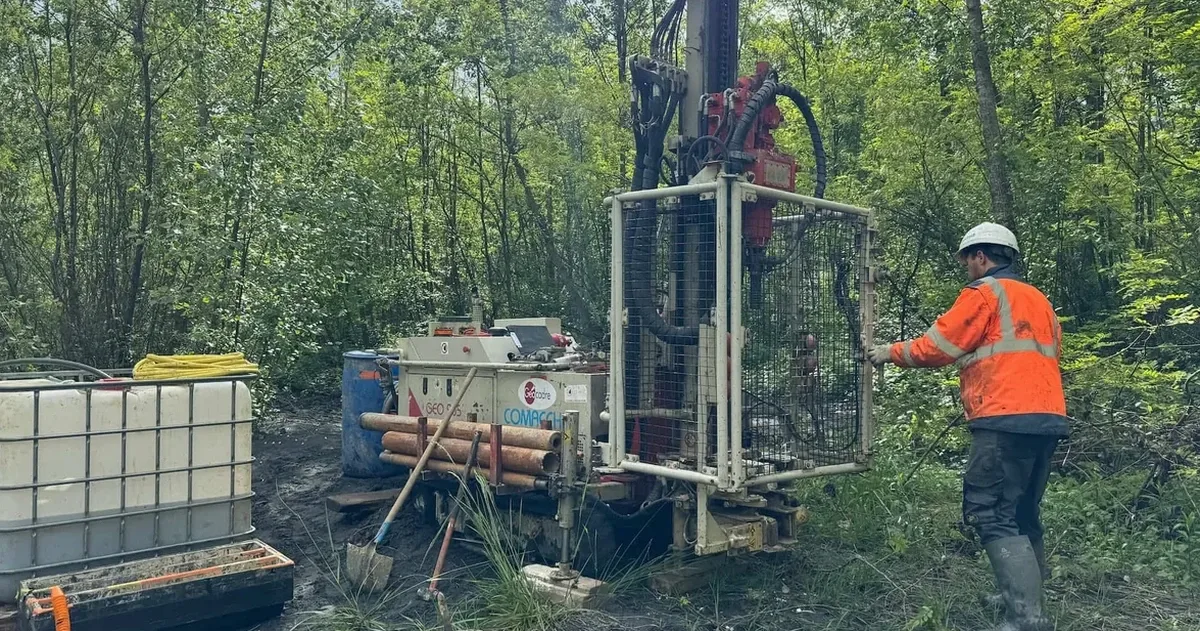
Seattle’s subsurface tells a story shaped by the Vashon glaciation, leaving deposits that range from overconsolidated till to soft lacustrine silts near Lake Washington and the Duwamish Waterway. A soil mechanics study here cannot rely on generic assumptions; the interaction between glacial advance outwash and the Seattle Fault Zone creates lateral variability that demands careful sampling. The IBC classifies much of the metro area as Seismic Design Category D, which means laboratory shear strength and consolidation parameters feed directly into foundation design decisions. Without a site-specific soil mechanics study, bearing capacity calculations and settlement predictions remain speculative, exposing the project to unnecessary risk. We tie every phase of the investigation to ASTM D1586 for SPT energy calibration and ASTM D2487 for unified classification, ensuring the geotechnical report withstands scrutiny from city reviewers and structural engineers alike.
Seattle’s glacial stratigraphy demands a soil mechanics study that goes beyond classification: we quantify consolidation settlement and effective stress strength so your foundation design matches the ground, not the assumption.
Method and coverage
Seattle sits at roughly 53 meters above sea level on average, but the terrain jumps from fill along Elliott Bay to steep slopes in Queen Anne and Capitol Hill within half a mile. This elevation change means our soil mechanics study must address both deep compressible layers in the lowlands and shallow bedrock in the hills. We run one-dimensional consolidation tests following ASTM D2435 to quantify settlement under sustained loads, which is critical for mat foundations on the former tide flats. Shear strength parameters come from consolidated-undrained triaxial tests with pore pressure measurement, giving design teams the effective stress envelope needed for slope stability analysis. For granular soils common in the outwash plains north of the Ship Canal, we determine relative density through SPT correlations and verify with in-situ density testing.
Because Seattle’s wet season saturates the vadose zone from October through May, we also run
grain size analysis to predict drainage behavior and frost susceptibility, and pair it with
Atterberg limits on the fine fraction to pin down the soil’s activity and shrink-swell potential. When the stratigraphy suggests interbedded clays and silts, we recommend a
triaxial testing program to capture the undrained shear strength profile that governs short-term excavation stability.
Local ground factors
In Seattle, we frequently encounter projects where the geotechnical report lists a bearing capacity of 2,000 psf for the native silt, yet the footing excavation reveals a lens of loose fill that extends three feet deeper than the nearest boring. That disconnect happens when the soil mechanics study relies on widely spaced borings without enough laboratory tests to catch stratigraphic traps. The Duwamish industrial corridor, built largely on hydraulic fill and sawdust layers from the early 1900s, is notorious for differential settlement that manifests years after construction. A soil mechanics study that skips consolidation testing on the fine-grained interbeds misses the time-dependent settlement component entirely.
We also see risk on hillside lots where the glacial till is stiff enough to support high bearing pressures, but the slope face has weathered into a weaker colluvium that creeps during rainy winters. Combining the soil mechanics study with a slope stability analysis reveals whether the proposed cut or fill triggers a failure surface through that weakened zone, and in the Magnolia or West Seattle bluffs, that analysis proves essential for permit approval.
FAQ
How much does a soil mechanics study cost for a single-family lot in Seattle?
For a typical residential lot within city limits, a soil mechanics study including two borings, laboratory classification, and a foundation recommendation letter runs between US$3.000 and US$4.930. The final cost depends on access constraints, depth to suitable bearing stratum, and whether slope stability or seismic analysis is required by the permit reviewer.
Which Seattle building permit applications require a soil mechanics study?
The Seattle Department of Construction and Inspections (SDCI) requires a geotechnical report for most new structures, major remodels adding vertical load, and any project on an environmentally critical area slope or liquefaction-prone zone. The report must meet IBC Chapter 18 and the Seattle-specific amendments.
What laboratory tests are included in a standard soil mechanics study?
A standard program includes moisture content, Atterberg limits, grain size distribution by sieve and hydrometer, unconfined compression on cohesive samples, and one-dimensional consolidation tests on selected specimens. We add triaxial shear and direct shear when effective stress parameters are needed for the design.
How deep do you drill for a soil mechanics study in Seattle?
Boring depth depends on the foundation type and subsurface conditions. For a two-story spread footing, we typically drill 20 to 30 feet or until we penetrate the bearing stratum by at least 10 feet. In the Duwamish basin, where compressible soils extend deeper, borings often reach 50 feet to capture the full settlement profile.
Can a soil mechanics study help with a retaining wall design on a Seattle hillside?
Yes. The study provides the drained shear strength, unit weight, and groundwater data needed for lateral earth pressure calculations. On steep lots in Queen Anne or West Seattle, we also evaluate global stability of the retained slope, which often governs the wall design more than the structural section itself.